
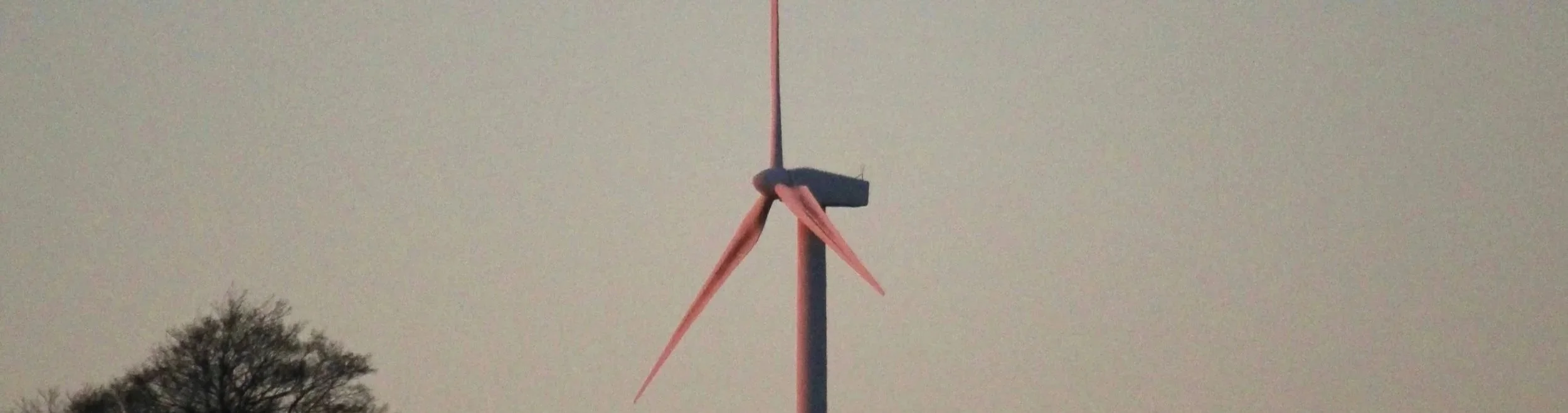
Shadow Flicker Assessments for Wind Turbine Developments
Shadow flicker assessments for wind turbine developments, helping project teams understand potential effects, support planning submissions and identify practical mitigation where required.
Shadow Flicker Assessments
Shadow flicker can be a planning consideration for wind turbine developments where rotating blades periodically pass in front of the sun and cast moving shadows across nearby homes or other sensitive receptors.
Where shadow flicker concerns are not addressed clearly, they can lead to planning objections, consultee queries, project delays or uncertainty for local communities. Modaxis provides independent shadow flicker assessments to help developers, planners and project teams understand potential effects and present clear evidence within the planning process.
A clear assessment can identify where shadow flicker could theoretically occur, which receptors may be affected, when effects may arise, how long they may last and whether mitigation is likely to be required.
When a shadow flicker assessment may be needed
A shadow flicker assessment may be required where residential properties, workplaces or other sensitive receptors are located close enough to proposed wind turbines for effects to be considered.
It may be needed as a standalone technical report, as part of an Environmental Impact Assessment, in response to planning authority comments, or where local residents or consultees have raised concerns about potential amenity effects.
Shadow flicker screening is often informed by distance-based criteria, commonly including a study area based on turbine rotor diameter. However, the appropriate assessment area should be considered in light of the project context, receptor locations, turbine dimensions, visibility and relevant planning authority expectations.
What Modaxis can provide
Modaxis can support projects with:
Shadow flicker assessments for wind turbine developments
Receptor identification and study area review
Shadow flicker modelling and results interpretation
Assessment of potential flicker duration and timing
Figures, tables and planning-ready reporting
Cumulative shadow flicker review where relevant
Mitigation advice, including layout refinement or turbine shutdown schemes where appropriate
Support with planning comments, objections or technical queries
Technical approach
Shadow flicker modelling considers the relationship between turbine geometry, receptor locations and the path of the sun. Assessments are often informed by distance-based screening criteria, commonly including a study area based on turbine rotor diameter. However, the appropriate assessment area and modelling assumptions should be considered in light of the project context, receptor locations, visibility and relevant planning authority expectations.
The assessment can identify the times of year and times of day when shadow flicker could theoretically occur, and estimate the potential duration of effects at relevant receptors. The results are then interpreted in planning terms, taking account of receptor sensitivity, likely visibility, screening, project context and any relevant authority requirements.
Supporting planning and stakeholder confidence
Shadow flicker is often a community-sensitive issue, so the assessment needs to be clear and understandable as well as technically robust. Modaxis prepares reports that explain the method, assumptions, results and mitigation options in a way that can be used by developers, planners, consultees and local stakeholders.
The aim is to reduce uncertainty, support a proportionate planning response and help the project team keep technical issues moving towards resolution.
Review shadow flicker risk
Send over your turbine layout, hub height, rotor diameter and nearby receptor information and Modaxis can advise on the right level of shadow flicker review.